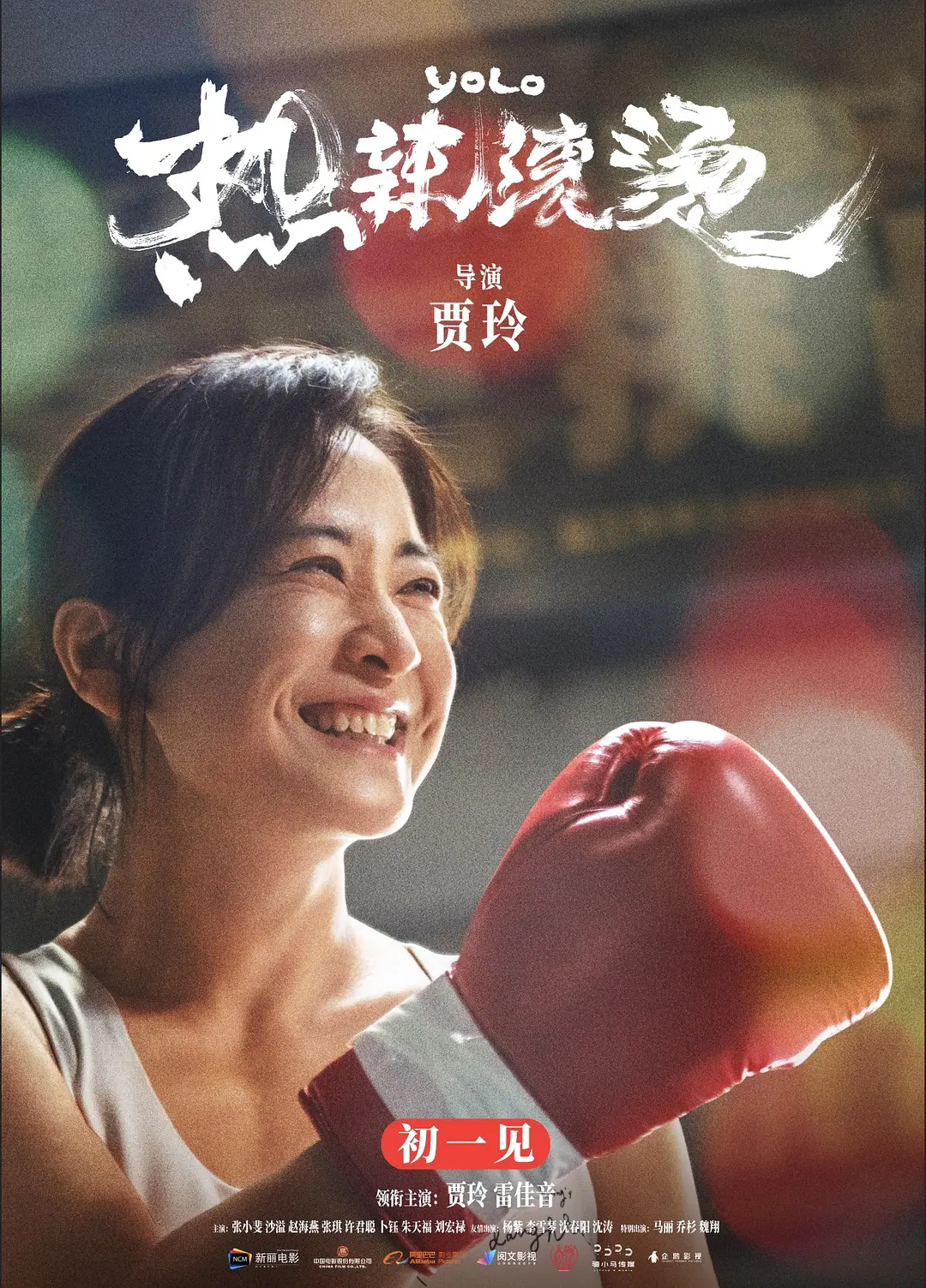
There has never been a shortage of inspirational films in the history of movies. The protagonists of these films are often in a state of distress and frustration. With tenacious will and unyielding fighting spirit, they have gone through many hardships and finally made remarkable achievements in a certain field, adding a brilliant stroke to their lives. Moreover, these protagonists often complete their counterattacks through a certain sport. This is probably because sports can vividly interpret the spirit of perseverance and brave struggle through the externally visible action, and provide viewers with images with great ornamental and emotional impact. In addition, a large number of audiences will be present in the "success" of sports, which is easy to create a warm and unrestrained atmosphere and make the hero’s "coronation" moment shine. The film can also quickly push the audience’s emotions to a high point through the lens language of highlights. At the same time, the indomitable will and indomitable enterprise in sports can easily be transformed into a vigorous and promising attitude towards life, which warmly encourages countless audiences.
Specific to boxing, it presents the confrontation between individuals in close combat, and the competition is strong strength, changeable skills and flexible pace, which can easily mobilize the adrenaline of the audience, define success and failure in a simple and clear way, and produce certain spiritual encouragement and life enlightenment to the audience in emotional stimulation. There are many movies about boxing or free fighting, such as series, (1980), (1997), (2005), (2010), (2011), (2013) and (2016). Most of these films are inspirational films, in which the protagonist finishes a head-on attack on the unhappy life by boxing or free fighting. It is also a film related to "inspirational".
The characters are slightly thin, and the logic of action is more reasonable.
YOLO’s greatest challenge in narration is to explain why Le Ying, the protagonist, stayed at home for ten years and felt at ease, and was indifferent to the out-of-control figure management. Finally, she was willing to lose 100 pounds with extraordinary perseverance and took part in a boxing match.
Although, through interviews with TV stations, Le Ying implicitly explained the reason why she couldn’t stay at home, that is, she was injured too much when interacting with people and had social phobia, but the audience still wanted to know more, such as her major in college, what happened to her in the workplace, why she became a flattering personality and so on. After omitting this information, the film only presents the results, which will lead to the audience’s understanding of the characters staying on the surface, only seeing the characters’ obesity and laziness, but knowing nothing about the characters’ personality truth and inner state.
In order to make Le Yinghuan’s fighting spirit alive, the film arranged relevant incentive events, which made the transformation of the characters authentic and had certain emotional appeal.
Among the injuries that Le Ying suffered, trampling on dignity and self-worth again and again was the main reason that finally made her decide to change herself. When she was laughed at by her sister, disliked by Hao Kun and despised by Doudou, Le Ying felt that she was not only an unnecessary person in the world, but also constantly ignored, played with, cheated, used and laughed at. When Le Ying was desperate to commit suicide, she jumped from the fourth floor unscathed because of too much body fat, which made Le Ying collapse. She felt pain, but there was no visible wound, just like her heart was scarred, but she could not find the cause and treatment direction. Le Ying finally decided to participate in boxing competition, not only to win a victory in the arena, but also to fight for the dignity of life and the shining of gloomy life.
Although the film reveals too little about the characters’ pre-life history and personality truth, it lays a sufficient foundation for Le Ying’s "awakening". When the characters are constantly frustrated emotionally and their self-esteem is hit again and again, the determination to resist fate will inevitably accumulate in their hearts, thus completing a reasonable and natural psychological evolution. The film can also be in a full emotional state, so that the spiritual transformation of the characters has a very strong emotional appeal to the audience.
The mapping relationship in the pedigree of characters.
Le Ying is surrounded by moral debtors: her sister cheated on her in marriage, her ex-boyfriend was not single-minded about her feelings, her girlfriends were full of heart, the store manager was dirty, and peas were duplicitous. Compared with these people, Le Ying is lazy and lacks self-discipline, but her mind is simple. Just as Le Ying is whispering and weak most of the time, she lacks an aggressiveness towards people and appears frank and tolerant, like a heartless good guy. For example, Le Ying knew that her sister was calculating her own house, and her sister had been taunting herself without scruple. After they had a fight, Le Ying still angrily signed the house transfer agreement. When Hao Kun distanced himself from others, Le Ying was only secretly sad and didn’t quarrel angrily.
Moral contrast can not only complete characterization, but also create comedy effect. Hao Kun used to be honest and unwilling to trick customers into getting a card by despicable means. Tianfu, on the other hand, takes advantage of his appearance, is ambiguous with female students, and even regards boxing as a means of flirting. In the process of presenting these details, the film not only completed the perspective of social reality, but also effectively realized the localization transformation of the original film.
The mapping relationship between the characters in the film is also reflected in the different attitudes of the characters towards their dreams. Hao Kun once had a dream of boxing, thinking that "people have to fight once when they are alive", but when he received 30,000 yuan from his opponent, he immediately compromised and felt that survival was more realistic than dreams. In contrast, once the goal is clear, Le Ying shows a touching and firm persistence. There are two contrasting scenes in the film: at first, Le Ying, who was wandering around the street with nothing to do, felt a deep envy and inferiority when she saw Hao Kun sweating in the boxing gym; When Le Ying began to pursue her life goals, she devoted herself to practicing in the boxing gym. Outside, Hao Kun, who was down and out, passed by with a complicated expression. At this moment, we realize that what really makes people shine is not appearance, but a kind of energetic attitude towards life; What really makes people feel ashamed is never their body shape, but their negative and decadent attitude towards life.
In the last game, Le Ying’s strength was obviously lost to professional players, and she was constantly beaten. In this regard, my sister is extremely confused: "I am sick, I can’t win at all. Why do you keep playing?" My sister can’t understand that Le Ying is facing not only a game, but also an ultimate game of self. What she needs to overcome is not her opponent, but herself, her inferiority, negativity and depravity, and her indifference and inaction to life. At this time, Le Ying and her sister have completely different understandings of "failure" and "success".
The film shows a rich pedigree of characters. Some people are frivolous and careless about life, some people do whatever it takes for their desires, and some even choose to give up their dreams and principles of being a man for their lives. Against the background of these characters, Le Ying has persistence and struggle. She believes that even if the music of life is not beautiful enough, it must be written by herself, otherwise life will only be silent and empty. This is the core value position of the film.
Improper narrative rhythm and superficial strategy of theme
The film uses a lot of space to lay out Le Ying’s decadent life state and her life experiences of constant frustration. It was not until about 50 minutes that Le Ying entered the boxing gym. In other words, the film took 50 minutes to complete the "building", introducing the background, personality and living environment of the characters. In the view of the classic scriptwriting method, this kind of treatment is too lengthy, which leads to the plot rhythm dragging and the narrative rhythm is seriously out of control.
After Le Ying entered the boxing gym, the development of the plot actually stopped. Because Le Ying was generally satisfied with this kind of life, she had Hao Kun around her, and she practiced boxing rights to lose weight. It was not until about 90 minutes that Le Ying decided to play. At this time, there were only more than 30 minutes left before the end of the film. In a general film, it takes about 25 minutes to basically establish the behavioral motives of the characters, then unfold the plot around the motives and obstacles, build more and more intense drama conflicts, lead the plot to a climax, and finally usher in a beautiful ending.
YOLO’s narrative rhythm is improper, which leads to the core "confrontation" stage not showing how Le Ying struggled with her laziness and depression in the process of preparing for the competition, how she clashed with the people around her, and how she solved the expenses of renting a house and practicing boxing after she quit her job as a waiter in a barbecue shop. Of course, she also couldn’t see how much pressure she suffered in the process of losing 100 pounds, or even how she did. In this regard, the film had to show the details of Le Ying’s weight loss and boxing practice with MV-style clips and bloody music, and create a passionate atmosphere, supplemented by intensive picture bombing, which made the audience have no time to think, and was completely dragged by a perceptual emotion, thus ignoring the irrationality of plot arrangement.
Because the film failed to show the dramatic tension of the characters in overcoming obstacles in the "confrontation" stage, the film focused on the changes of the characters’ body shape before and after. In contrast, Love for a Hundred Dollars does not describe the miracle of an actor’s weight loss, but delicately shows the changes of boxing to the mental outlook and inner world of the characters, and excavates the infinite power contained in everyone. In YOLO, Le Ying didn’t really become a boxer when she resisted the harassment of the store manager. She just hit back a punch without any rules. If this detail can be handled better, it can profoundly affect the characterization and the attraction of the plot.
The film YOLO is wonderful, but it lacks the heavy flavor of life and the in-depth excavation of the characters’ psychology. It only shows the only boxing match of the characters on the visible level, rather than a complete life course of the characters. Although YOLO made Le Ying complete her epiphany and growth in life by the way of anti-climax, it is still somewhat "light". It is unwilling or unable to show a kind of grief of impermanence in the world, or the calmness and helplessness of reading all the vicissitudes of life, but it is repeatedly rendered on the level of blood and inspiration, and rarely touches the struggle of the characters’ hearts and the cry of the soul. This makes YOLO move and inspire the audience instantly, instead of pursuing more profound and lasting enlightenment and reflection. Even many viewers will regard the film as an inspirational film to lose weight. Perhaps, this is a kind of "consideration" reflected in artistic creation after the changes of the times, which limits the audience’s satisfaction and pleasure to a short period of watching movies, and limits the audience’s touch to superficial visual shock and emotional touch. (Author: Fudan University Art Education Center Professor Gong Jinping)