Xinhua News Agency, Beijing, November 11th Title: "double 11" for 11 years: China’s distinctive mark towards a big consumer country.
Xinhua News Agency reporters Wang Yuxiao, Zhao Wenjun and Natalie.
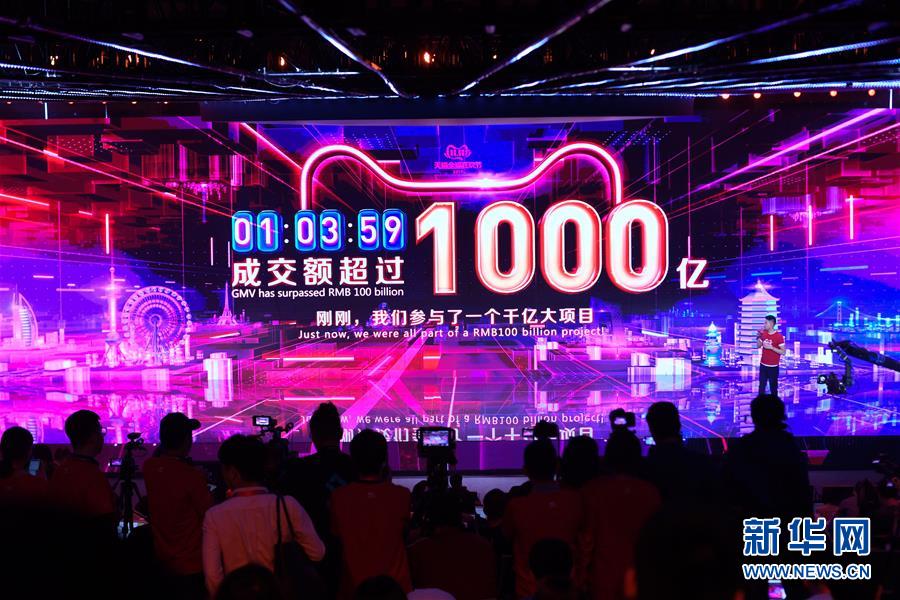
On November 11th, in the media center of Xixi Park in Alibaba, Hangzhou, Zhejiang Province, the big screen showed that the turnover on Alibaba platform exceeded 100 billion yuan in 1 hour, 3 minutes and 59 seconds. Xinhua News Agency reporter Huang Zongzhi photo
14 hours, 21 minutes and 27 seconds, 200 billion yuan —— On the 11th, as soon as the promotion of Tmall’s "double 11" was launched, the turnover hit record highs, and a huge consumption boom came on our faces.
Since the birth of the first "double 11" in 2009, the 11-year evolution of "double 11" has witnessed China’s firm step towards becoming a big consumer country.
Shopping changes, consumption upgrades map the people’s better life.
In the past 11 years, the "shopping cart" in the hands of China people has moved from offline to online, and the change of form and content has become a distinctive mark of the new era of consumption.
At one time, families in the 1980s had to purchase "three big items"-refrigerators, color TVs and washing machines. With the people’s wallets bulging, when the "three big items" gradually become the standard of ordinary families in China, some "small appliances" that focus on the details of life and increase happiness gradually become new needs.
Take the turnover of Tmall "double 11" as an example. In 2009, the most popular household "three small items" were heaters, electric hand warmers and humidifiers; In 2017, it was replaced by new "three small pieces"-sweeping robots, air purifiers and vacuum cleaners; In this year’s "double 11", quality electrical appliances such as steam mop, air fryer and mite remover have become consumers’ "new favorites".
The small "shopping cart" is like a miniature video recorder, which records the changes of consumption in China.
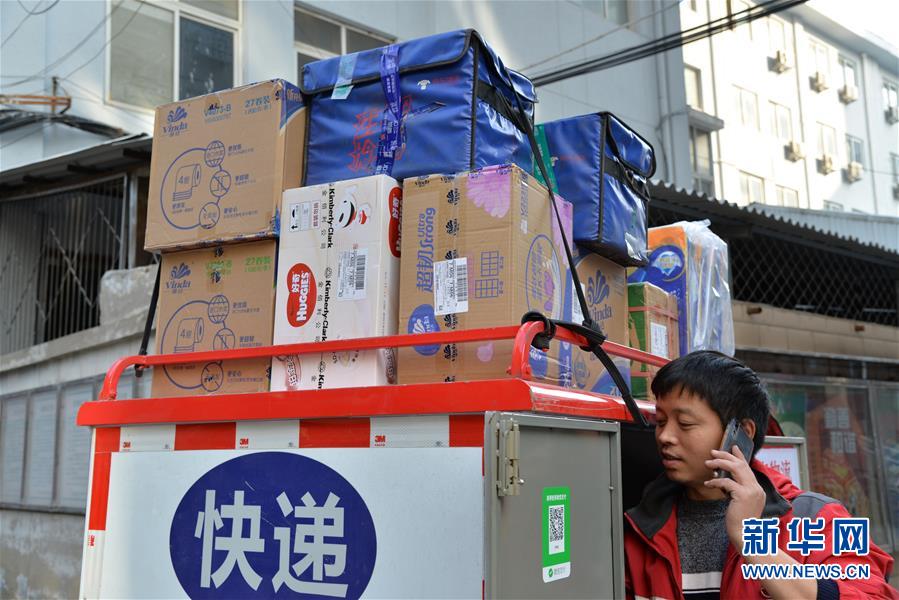
On November 11, 2018, the courier Li Yanzhao contacted the customer under a residential building in Financial Street, Beijing, and prepared to deliver it to the door. Xinhua News Agency (photo by Xu Qin)
—— From "buying national good goods" to "sweeping global top goods"
In recent years, Chinese’s "shopping cart" has become more and more international.
In the pre-sale stage of "double 11" this year, the sales of maternal and child care products and personal care products increased by 137% and 163% respectively, and the sales of digital, health care and home furnishing increased by nearly 100%. At the Second China International Import Expo(CIIE), Spanish "Big Mac" bluefin tuna, Italian olive oil and other imported goods appeared in succession.
Zhang Jindong, chairman of Suning Holding Group, said that internationalization is the strategic focus of Suning in the next decade. Suning is accelerating the introduction of overseas quality goods into China by strengthening cooperation with overseas brands and expanding the scale of direct production of origin, so that China consumers can "buy all over the world without leaving home".
-assembly line products "transform" customized products
In the past "double 11", consumers bought what merchants sold; In today’s "double 11", enterprises make what consumers want.
Yu Xuefeng, a businessman in Cixi, Zhejiang, told reporters that under the influence of the concept of health and light food, the company aimed at the demands of young consumers and customized a sandwich breakfast machine in reverse, and sold more than 2,500 pieces in one hour.
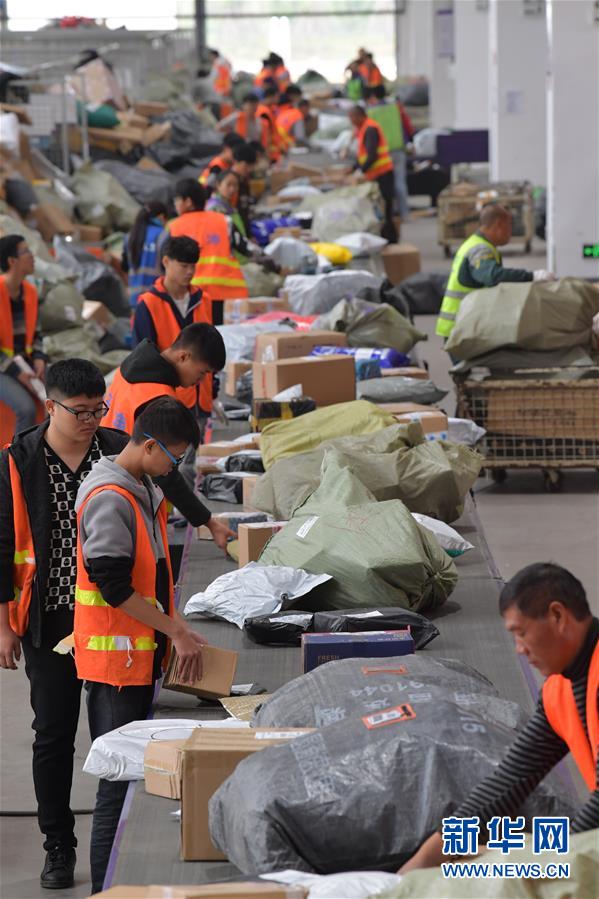
In Nanchang Transshipment Center of YTO Express Company, staff are sorting express parcels on the assembly line (photo taken on November 14, 2018). Xinhua News Agency reporter Peng Zhaozhi photo
"There is no uniform consumer group in China." The report released by McKinsey, an international consulting firm, judged this. Individualized consumer demand subverts the production logic of traditional manufacturing industry, and the escalating consumer demand gives birth to "seventy-two changes" in manufacturing in China, and flexible production and reverse customization become a new trend.
-"Fancy service" leads the "new consumption era"
In this year’s "double 11", Tmall launched more than 55 kinds of services, including on-site beauty service, luxury goods maintenance, household appliances disassembly and washing, etc. Easyhome and Red Star Macalline brought "home improvement take-out" services, and users in Beijing, Shanghai and Chongqing could "order" furniture within 15km.
Unforgettable food, travel and splendid performances … Statistics from the National Bureau of Statistics show that in the first three quarters, service consumption accounted for 50.6% of all residents’ final consumption expenditure, exceeding half of the residents’ consumption. Various kinds of "fancy services" are constantly emerging, leading China into a "new consumption era".
After 11 years, in Chinese’s shopping cart, goods and services, foreign goods and national tide "Qi Fei" … are constantly upgrading their consumption through the changes of "what to buy" and "how to buy", which is changing the life of Chinese.
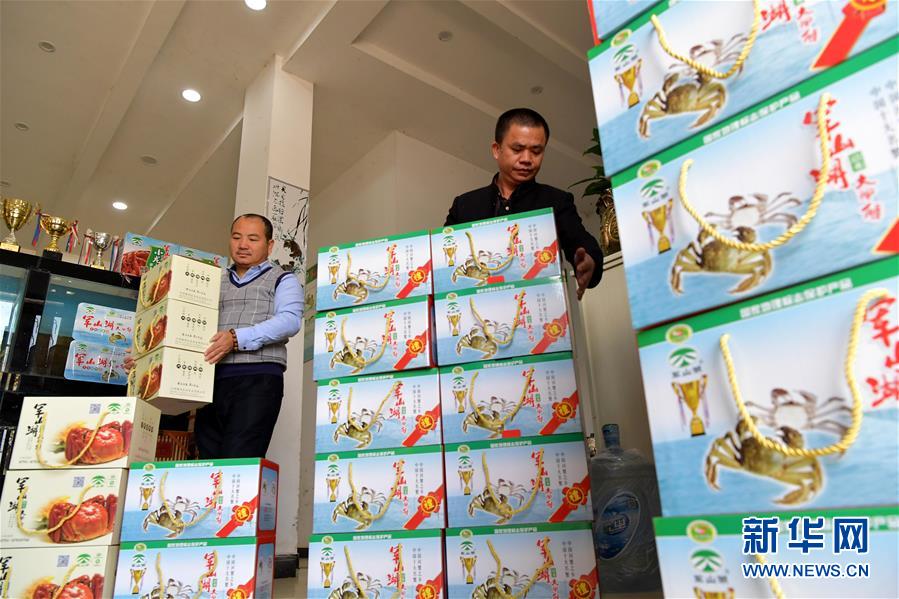
At the online sales outlet of Junshanhu Hairy Crab in Jinxian County, Jiangxi Province, the staff is ready to deliver the boxed hairy crabs to online shopping customers (photo taken on November 9, 2018). Xinhua News Agency reporter Peng Zhaozhi photo
The change of transaction and the improvement of efficiency make the consumer experience more comfortable.
"Looking through the autumn water and looking forward to the package" was once the common memory of every "double 11" buyer.
Beijing resident Li Yan still remembers that in double 11 in 2009, she ordered a skirt by herself, and it took ten days to finally arrive. This year in double 11, sinar placed an order for a small household appliance in Suning, and it was delivered to her "with hot air" that day.
Technology brings the change of experience, and the improvement of logistics witnesses the change of transportation efficiency in China.
In response to the "double 11", the "Spring Festival travel rush" in the express delivery industry, various express delivery companies have shown their "killer" this year.
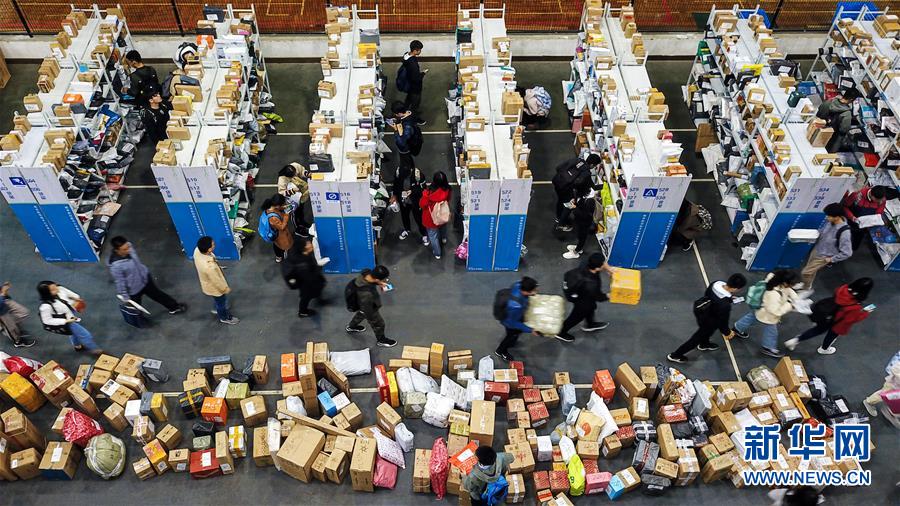
Teachers and students of Nanjing University of Aeronautics and Astronautics receive express delivery at the campus temporary express delivery pick-up point (photo taken on November 13, 2018). In order to cope with the "Double Eleven" campus express parcels, Nanjing University of Aeronautics and Astronautics built the indoor tennis court of the school sports center as a temporary express pick-up point on the basis of the original "express supermarket", which is convenient for teachers and students to pick up the parcels. Xinhua News Agency reporter Li Boshe
SF implements intelligent management of the whole process; ZTO Express invested in high-capacity trucks that can realize dynamic steering and other functions; Shentong Express launched the AI intelligent customer service robot; YTO Express has set up more than 60 urban distribution and package building centers to simplify transit and operation processes; Yunda Express’s "Rhyme Dart Man" App allows express mail to catch the information "Express" …
Fully automated sorting assembly line, AR volume technology, "Eye of Logistics" … There are many "black technologies" hidden in small express delivery. This year’s "double 11", Suning will expand its instant distribution from fresh food to maternal and child, home appliances and other categories, promising "30 minutes for all categories in 1 km" and "1 hour for all categories in 3 km"; The rookie network launched the latest generation of smart warehouses. Under the AI scheduling, more than 1,000 robots cooperated and the delivery capacity increased by 60%.
Ma Junsheng, director of the State Post Bureau, said that in 2015, the courier brother handled less than 10,000 parcels per capita. In 2019, this number was 16,900. This means that the labor productivity of the express delivery industry has increased by 70% in five years.
More and more rural people are also joining the ranks of "buying in buy buy"-the coverage rate of rural express outlets reaches 95.22%. Relying on the postal network, even the most remote rural areas can reach express delivery.
The rapid development of logistics technology and the increasingly dense logistics network make the express delivery "explosion" a history. "double 11" also waited anxiously after the initial order was placed, and reached the next day, the same day and an hour … "People sit at home and goods come from all directions" has become a "small fortunate" that every China consumer can see and touch.
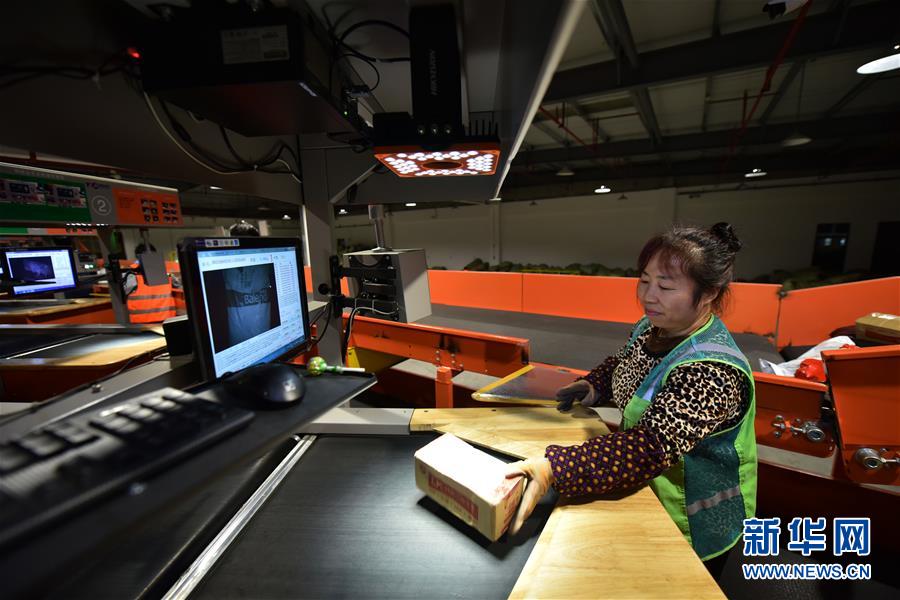
In the automatic sorting workshop of a courier company in Longli County, Guizhou Province, the picker works on the assembly line (photo taken on November 13, 2018). Xinhua News Agency (photo by Rocky Jo)
The changes brought by technology are not just logistics.
In the past, payment was only completed by manually plugging and unplugging the U shield, but now it can be paid in seconds by "shaking your head" and "little hand" … The technological change has brought about the innovation of payment means, making people enjoy a more convenient and insensitive payment experience.
Cheng Li, chief technology officer of Ant Financial Services, recalled that in 2010, the fast payment technology was introduced, which allowed users to omit the cumbersome steps such as online banking jump and inserting U shield, and the payment success rate was greatly improved from 60% to 95%, which not only greatly improved the payment experience of double 11, but also laid the foundation for the development of mobile payment in China.
Nowadays, mobile payment has long been integrated into daily life and has become an indispensable part of online business model. A large amount of data generated in the payment process has also become an important source for building a social credit system.
Big data targeted push, blockchain technology applied to security traceability, AI intelligent customer service … Technology "super evolution" has created a brand-new shopping experience, making China consumers more comfortable to buy.
The change of concept shows the attraction of China market as a magnet.
Today’s "double 11" is already a grand symphony of online and offline "ensemble".
"In China, for China." Walking into the second China International Import Expo(CIIE), many foreign exhibitors put up slogans of taking root in China. Photochromic contact lenses, "customized skin mask" and "binoculars" capable of monitoring body temperature … More and more creative goods and high-quality goods from all over the world "run" into China, or sign contracts with physical stores, or join hands with e-commerce platforms for online sale.
How attractive is the China market? The answer is self-evident.
In China International Import Expo(CIIE), Polish Weiqi Food Group and Wumart Group signed a large order of 10 million euros, focusing on the broad market of Wumart’s 1,500 stores.
You Deliang, chief representative of the Polish Investment and Trade Bureau in China, said that in the first half of this year, the growth rate of Poland’s exports to China increased significantly, with the export of agricultural and sideline products increasing by 77%. Many Polish companies want to sign up for China International Import Expo(CIIE) this year, hoping to find business opportunities in China, but many companies can’t sign up because it’s hard to find an exhibition.
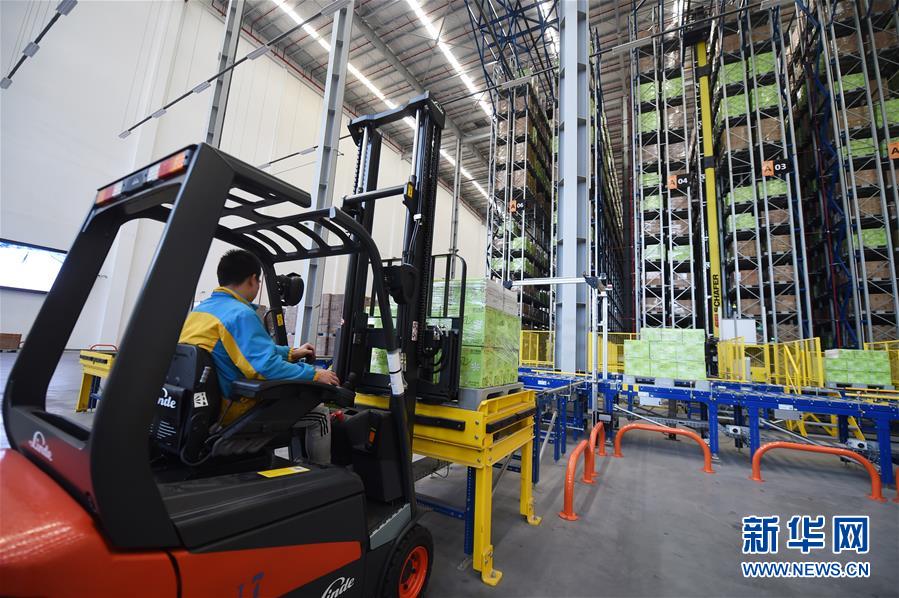
The staff is busy in a smart logistics base in Nanjing Yuhua Economic Development Zone (photo taken on November 3, 2016). The logistics base has a building area of more than 200,000 square meters, which can store 20 million pieces of goods and handle 1.81 million pieces of parcels every day. The whole logistics base can realize the automatic operation of the whole process, from order generation to commodity delivery, which can be shortened to 30 minutes at the earliest. Xinhua news agency
Liu Peng, general manager of Tmall Import and Export Group, said that among the brands participating in the second China International Import Expo(CIIE) exhibition, 113 new brands will enter Tmall International and reach the China market for the first time. Up to now, more than 22,000 overseas brands from 78 countries and regions have settled in Tmall International, covering more than 4,300 categories.
"The consumer market of nearly 1.4 billion people in China has given birth to a huge space for innovation and provided a platform for us to launch more good products." Lin Wenfeng, general manager of Australia Smart Wear Health Industry Co., Ltd. said.
The new model opens up a new space for consumption-
The 11-year "double 11" witnessed the change of consumption from offline to online, and now online and offline "double flowers bloom".
Suning uses community stores to connect online and offline to create a "one-hour scene life circle". While the online sales of "double 11" are hot this year, many orders come from offline stores; In Shanghai Longzhimeng Shopping Park, Tmall Smart Business Circle has three "red packets of rain" every day, and the number of page visitors in three days has reached 60,000, breaking the historical record of red packets interaction in a single shopping mall …
"Under the trend of consumption upgrading, the retail boundary between different scenes has been broken, and online and offline are no longer separated, but deeply integrated." Zhao Ping, director of the International Trade Research Department of the China Council for the Promotion of International Trade, said.
The new main force stimulates the new vitality of consumption-
This "double 11" and "small town youth" once again demonstrated their strong purchasing power. Pinduoduo backstage data shows that on the morning of 11th, all the "national models" of five car companies, including Changan, Wuling Hongguang, Qoros, MG and Baowo, which participated in the "double 11" activities, were sold out, and most of these cars were bought by consumers from sinking markets in third-and fourth-tier cities.
Zhao Ping said that the level of urbanization is constantly improving, the income gap between urban and rural residents is constantly narrowing, and middle-income groups contain a large number of new consumption demands … all these will be a solid guarantee for the stable development of the consumer market.
New technology promotes new kinetic energy of consumption-
According to the forecast of China Information and Communication Research Institute, between 2020 and 2025, the commercialization of 5G will directly drive information consumption by 8.2 trillion yuan. The upgrading of terminal products such as smart phones and wearable devices will release 4.3 trillion yuan of information consumption space.
According to Sun Weimin, vice chairman of Suning.cn Group, smart retailing based on Internet of Things, big data, cloud computing and other technologies has become an inevitable trend of business development, and will also become an important starting point for stimulating consumption.
The size of the sea lies in its vastness and depth. International consulting organizations predict that in the next 10 years, for every dollar spent globally, 12% will come from China consumers.
Where is the market, where is the future. With a population of nearly 1.4 billion and the largest middle-income group in the world, the huge domestic demand market supports the broad development space of China’s economy. From the world factory to the world market, China, which is constantly moving towards high-quality development, will surely release greater consumption potential in the future and let the China dividend benefit the whole world.
News link:
Xinhua Commentary: Eleven years of "double 11", the miracle of China in the shopping cart.