There are still many art exhibitions in winter. In the week of early December, the most interesting one is the "Gentleman as Orchid: Art Special Exhibition to Commemorate the 110th Anniversary of Bai Jiao’s Birth" in Shanghai Jinshan District Museum, which presents the brilliant artistic life of Bai Jiao, a poet, scholar and art educator. China National Museum’s "Commemorating the 110th Anniversary of Li Keran’s Birthday-Exhibition of Mo Tianjing Li Keran’s Works in the Last Ten Years" not only shows Mr. Li Keran’s paintings, but also presents the scenes where he once lived and created. In addition, the "Royal Crown Exhibition in West Cameroon, Africa" at the Metropolitan Museum of Art in the United States and the "Italian Moment-Masterpiece of Upper France" at the Lens Branch of the Louvre in France are also worth looking forward to.
Shanghai:
Art Exhibition of Ancient Murals in Shanxi Museum
Exhibition period: November 30, 2017-March 4, 2018
Venue: Shanghai Museum

This exhibition, jointly sponsored by Shanghai Museum and Shanxi Museum, selects 12 groups of 89 treasures of tomb murals unearthed in Shanxi during the Northern Dynasties and the Song, Jin and Yuan Dynasties, all of which are publicly exhibited for the first time. It is the largest special exhibition of ancient murals so far. The exhibition is divided into two parts. In the first part, "Heaven is like a vault", there are 36 exhibits in three groups, which are from Loucuo Tomb in Beiqi, Taiyuan, the mural tomb in Shuiquanliang, Shuozhou and the mural tomb in Jiuyuangang, Xinzhou. Among them, the Shuiquanliang Beiqi mural in Shuozhou painted the earliest and most complete picture of the zodiac, and the architectural mural of the Northern Dynasties was first discovered in Jiuyuangang mural in Xinzhou. The tomb of Shuiquanliang Beiqi mural will also be restored at the exhibition site. In the second part, "People are also Loess", there are 9 groups of 53 works, from the mural tombs of Song and Jin Dynasties in Queens Village of Yuxian County, the mural tombs of Jin Dynasty in Nanguan Village of Fanshi, the mural tombs of Nanhuyan Village in Xinzhou, M1 mural tomb in Xiguan Village of Pingding, Yuan tomb in Yangquan East Village, etc.
Peer-2017 "Belt and Road" International Art Joint Exhibition
Exhibition period: November 13, 2017-March 31, 2018
Venue: China Art Palace

"Peer-2017 Belt and Road International Art Joint Exhibition" includes four major exhibitions: "Beautiful Western Australia" China-Australia photography joint exhibition of "Beautiful Moisturizing Heart and Beautiful Two Cities" (from November 13th to January 30th, 2018), "Beyond the Heaven: Mongolian Art in Today’s Times" and "Sailing: A Tour of Serbian Contemporary Art" Through four exhibitions, people of different nationalities and cultures are connected to have a dialogue with common spiritual language.
A Gentleman Like a Orchid: An Art Exhibition to Commemorate the 110th Anniversary of Bai Jiao’s Birth.
Exhibition period: November 25th-December 24th, 2017.
Venue: Jinshan District Museum

Bai Jiao is a famous modern painter, art educator and a native of Zhangyan, Jinshan, Shanghai. This year marks the 110th anniversary of Mr. Bai Jiao’s birth. This exhibition is divided into four sections —— "Thousand-year-old town, romantic in the clouds", "Book is the heart painting, the charm of Wei and Jin Dynasties", "A generation of Lanwang, a friend of a gentleman", "It is the responsibility of every man to save the world", and through more than 100 collections of paintings and calligraphy works, celebrity relics and historical documents, Bai Jiao, a poet, scholar and art educator, is displayed beyond the dimensions of painters and painters previously known. Among them, the largest exhibition is the eight screens of Bai Jiao’s regular script "Preface to the 60th Birthday of Mrs. Liu, Zhang Mu" collected in Jinshan District Museum in 1939.
Shanghai visual art design exhibition
Exhibition period: December 3-December 13, 2017.
Venue: Liu Haisu Art Museum

Standing in the field of visual design, the exhibition revisits the concept of "open works" and does not call for giving up "technology", but on the contrary, it expects that new technology will bring about the reorganization in the creative sense, and the exhibition expects the new vitality nurtured by "creators, readers and works". Highlights of this exhibition include: Special Exhibition: Tribute to mitsuo katsui’s Visual Art Career, Global Exhibition of 25 Visual Art Designers, Extension of Interface-Dynamic Poster Art Design Exhibition, D&AD2017 Award-winning Works Exhibition and SIVA Design Education Achievement Exhibition. Among them, the special exhibition will display 42 posters by mitsuo katsui, a Japanese graphic design master, and 26 sets of precious book design masterpieces and some video works that run through the history of modern Japanese design, with a creation span of more than 40 years.
Xishan Qingyuan: Sean’s Chinese Painting Exhibition
Exhibition period: December 8 to December 17, 2017.
Venue: Jinghua Art Space

As the vice president and painter of Shanghai Chinese Painting Academy, Sean originally graduated from the Chinese Department of Fudan University, and loved painting since childhood. His works are popular, elegant, fresh and natural, and have won the interest of predecessors’ pen and ink, elegant artistic conception, smooth brushwork, calm and bright colors. The works on display this time are hand-rolled, album-printed, vertical shaft, fan-shaped, sketch and other forms, all of which are meticulous works accumulated by artists for many years.
My 60 Years-Li Xiushi Art Retrospect Exhibition
Exhibition period: December 6-December 23, 2017
Venue: Shanghai Oil Painting Sculpture Institute Art Museum

This exhibition consists of 10 important nodes of Mr. Li Xiushi, which show his 60-year artistic course, and pay more attention to the exhibition and presentation of documents, with a strong sense of history. The sketches of the famous work Crossing the Yangtze River in 1959, the materials reported by the media at that time, the remnants of the thematic works replaced by Spring to Xing ‘an Mountains, the historical photos of the Huangshan Conference and the Fourth American Congress of the Chinese Artists Association in 1985, and the stories and graphic materials behind them will be vividly displayed in this exhibition.
Cloud Mountain for Swallows —— Special Exhibition of Yamagata Yashi and Ink Stone Mountain
Exhibition period: December 1-December 16, 2017.
Venue: Xuhui Art Museum

This exhibition is an attempt in the field of elegant play in the study. There are many kinds of elegant play, but only strange stones can be offered and rewarded, so there are the sayings of "offering stones" and "supporting clouds". Artists participating in this exhibition include Chai Yiming, Gan Yongchuan, Liu Xu, Liao, Ma Xinyang, Pang Fei, Shen Wei, Shen Ben, Yu Qiping and Zhao Xudong. These artists are fond of stone for a long time and have their own exploration of stone appreciation and painting. In this exhibition, I hope that visitors can gain an understanding of stone-to-art from their works.
Exhibition of Su Xiaosong’s Traditional Chinese Paintings in Italy and Ancient Society
Exhibition period: December 1st-December 3rd, 2017.
Venue: Duoyun Art Museum

More than 60 works by Su Xiaosong, an exhibitor, will be exhibited in this exhibition. Mr. Su Xiaosong studied under the painter Jiao Yu. In his early years, he imitated the painting style of virtual valley, and his brushwork and meaning were similar. Later, he mainly participated in editing the series of picture albums of "Yi Yuan Yi Ying".
Hidden-Exhibition of Bai Ying’s Works
Exhibition period: December 3-December 31, 2017.
Venue: No.8 Bridge Art Space-1908 Granary.

Bai Ying’s works are more based on the artistic representation of the shapes, lines and ink expressions of the characters. The works on display in this exhibition include a series of new works by Bai Ying in recent years, with the theme of "water", and the picture content presented is often not directly related to water. Taking "Huan" as the theme of the exhibition has become a position, that is, it is hidden and present, and the directness of the rippling blue waves can be an indirect one. This is the correlation between two levels, on the one hand, the spatial extension and diffusion of ink painting, on the other hand, the integration and infiltration of Chinese painting and western art after mutual introduction.
The lingering charm of three inks-Liu Sanyu’s Chinese painting exhibition
Exhibition period: December 8-December 12, 2017
Venue: Shanghai Library

Liu Sanyu studied under Mr. Xu Fang and Mr. Feng Shifu, and there are three kinds of brush and ink in his works: Jiao Mo, colored ink and ink. Needless to say, Jiao Mo’s Jiao Mo flowers and birds, unique pen and ink, unique charm. Colored ink, on the other hand, comes from tradition but does not stick to it. It is novel and colorful. Ink painting continues the tradition of literati painting and inherits the style of Shanghai painting school, and the charm of Shanghai painting school is more than that of Sichuan.
Stealth-Exhibition of Zhuang Jie&Mo Shuwen’s Works
Exhibition period: December 1-December 27, 2017.
Venue: melnikov Art Museum

The two artists participating in this exhibition, Zhuang Jie and Mo Shuwen, are two young artists. Zhuang Jie’s oil paintings reflect personal ingenuity in the use of concreteness and abstraction, gray and bright colors, and convey the traditional and innovative ideas of oil painting art. There are 18 pieces of her works in this exhibition. Mo Shuwen’s works are mainly abstract, drawing lessons from the exaggerated and distorted expressions of Ou Jifu and Yayoi Kusama, and her paintings are more inclined to the expression of mood than concrete things. She has 13 works on display in this exhibition.
Nourishing Vegetables in Qiuyuan —— Wang Gufu’s Landscape Painting Exhibition
Exhibition period: December 5-December 20, 2017
Venue: Deqiu Art Museum
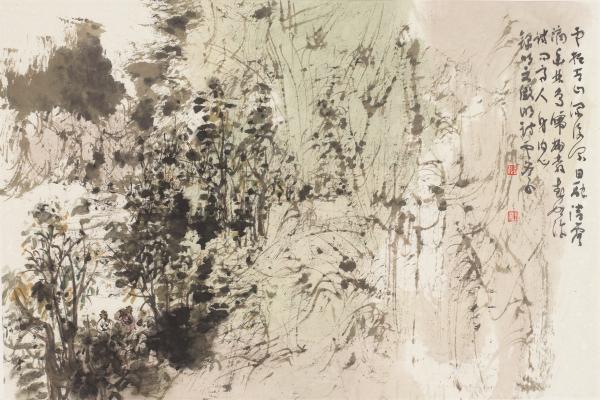
A total of nearly 30 pieces of Wang Gufu’s works were exhibited in this essay exhibition, which was launched in the form of elegant collections. The author aims to study the organic combination of pen and ink spirit and cursive spirit of landscape painting, highlighting the writing. Under the guidance of its emotion, writing is characterized by continuity, correlation and germinal writing.
Beautiful Water —— Exhibition of Sun Jiapei’s Works
Exhibition period: December 3-December 31, 2017.
Venue: No.8 Bridge Art Space-1908 Granary.

Sun Jiapei, a painter living in Japan, rarely has a panoramic composition, but often intercepts the most artistic pictures to create a quiet effect. Realism is the main tone of many of his works, but at the same time, he also focuses on depicting the atmosphere, which is the characteristic of his paintings, and this characteristic can be realized in almost all his works. Sun Jiapei’s love for water towns dates back to his childhood. He likes to observe the changes of light and water, and he can also feel the implication of combining the scenery of water towns with the memories of his youth from his works. In addition to the water towns in the south of the Yangtze River, there are many works in this exhibition depicting the waterscape of European towns.
Beijing:
Commemorating the 110th Anniversary of Li Keran’s Birthday —— The Exhibition of Li Keran’s Works in the Last Ten Years of Mo Tianjing
Exhibition period: November 30, 2017-January 3, 2018.
Venue: China National Museum.
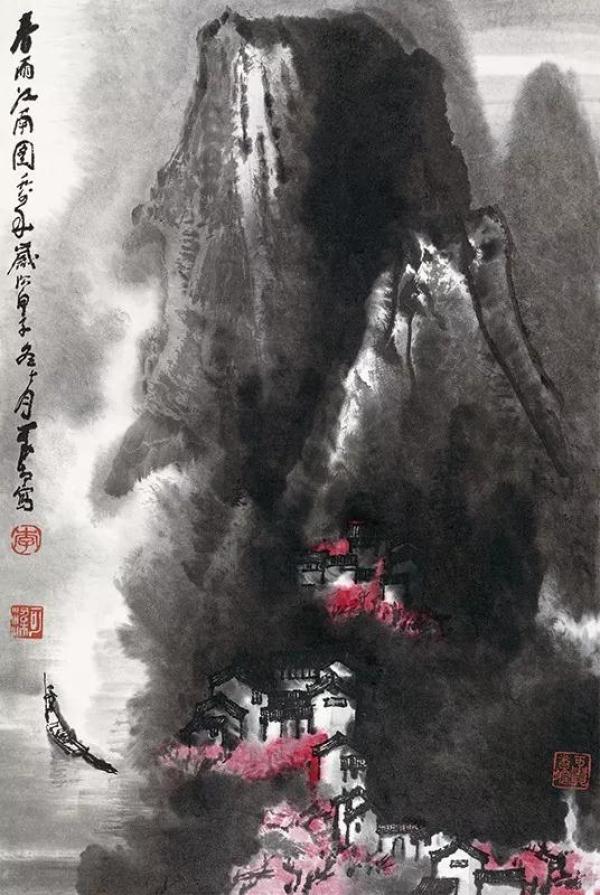
Li Keran was an outstanding painter and poet in modern China and a disciple of Qi Baishi. 2017 is the 110th anniversary of Mr. Li Keran’s birth. This exhibition specially selected 110 masterpieces and calligraphy works of Mr. Li Keran in the last 10 years from 1979 to 1989, and held this exhibition with the theme of "The Heaven of Mo" to commemorate this great artist. Mr. Li Keran’s last decade was his most brilliant one, and it was also the decade when he reached the peak of his life art. In the same period of the exhibition, Mr. Li Keran’s "Shi Niu Tang" studio was restored and reappeared. Through the restoration of the studio scenes, those moving historical pictures were reproduced, and the scenes where Mr. Li Keran once lived and created were vividly displayed.
Praise to British Artists and British Printing Culture —— From Huo Jiasi to Turner
Exhibition period: November 24, 2017-February 28, 2018.
Venue: Secler Museum of Archaeology and Art, Peking University

This exhibition mainly focuses on the golden age of English art, starting from william hogarth (1697-1764) and ending with Joseph Marlowe William Turner (1775-1851). For Britain, this hundred years has been a glorious era, and at this point, British art has also begun to move toward the center of the world stage. The exhibition will display watercolor paintings and prints from important artists in this period; At the same time, it will also focus on the "printing culture" with printmaking as the carrier. "From Huo Jiasi to Turner" is a grand proposition. This exhibition hopes to reproduce the prosperity of British art in the 18th and 19th centuries, and outline the British style hundreds of years ago with exquisite works.
Hangzhou:
Exhibition of female painters’ works in Ming and Qing Dynasties
Exhibition period: November 25th-December 24th, 2017.
Venue: Wulin Hall of Zhejiang Provincial Museum

China’s ancient paintings have experienced thousands of years of development, and famous artists have emerged in large numbers, but the footprints of female painters are often hidden. Especially before the Ming Dynasty, no matter from the historical records of painting or the circulation of works, female painters were rare. After the Ming Dynasty, Lv Kun, Tang Xianzu, Yuan Hongdao and other scholars with advanced ideas put forward new views on women’s issues in varying degrees, which caused the society to re-examine the value of women, and gradually enhanced women’s self-awareness and status. This exhibition integrates more than 60 paintings and calligraphy works of more than 30 boudoir painters in Ming and Qing Dynasties collected by Zhejiang Museum, Changzhou Museum and Changshu Museum.
The Great Exhibition of the 120th Anniversary of Pan Tianshou’s Birth
Exhibition period: December 1, 2017-January 14, 2018
Venue: Zhejiang Art Museum

Pan Tianshou (1897-1971) was a master of Chinese painting and an art educator in the 20th century. This exhibition is the largest exhibition of Pan Tianshou’s works in history. More than 120 representative works of Pan Tianshou and their manuscripts will be exhibited. The exhibition is divided into "high wind and strong bones", "drinking life", "blindly bullying and fierce", "strange rise and bright gap", "Yandang Mountain Flower" and "keeping constant and changing". Starting from artistic style, educational contribution, painting thoughts, pen and ink achievements, composition and composition, Chinese sketching, inheritance and innovation, this paper weaves painting, painting theory and poetry into one, tells Pan Tianshou as an artist, educator and painter in an all-round way, and shows the audience this three-dimensional painting history great man.
Guangzhou:
East and West on Fans: Exhibition of Chinese and Western Fans in 18th and 19th Century
Exhibition period: December 1, 2017-April 1, 2018.
Venue: Guangdong Folk Arts and Crafts Museum
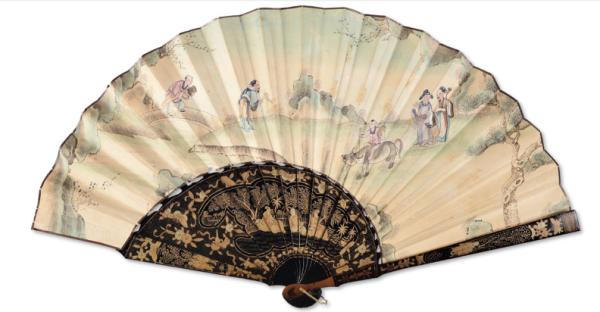
Located on the coast of the South China Sea, Guangzhou has been the geographical hub of the "Maritime Silk Road" since ancient times. In the first half of 18th-19th century, Guangzhou’s various arts and crafts, including all kinds of exquisite export fans, confirmed the development of the golden age. Guangzhou’s export-made fans are excellent in technology and diverse in materials, which has also influenced the production styles of fans in Britain, France and other countries, and "China element" has appeared on fans. The exhibition will display 47 Guangzhou export fans and 26 European fans. The exhibition is made by borrowing fine fans with distinctive China brand from Victoria and Albert Museum, Fan Museum and Fitzwilliam Museum in England, and combining the collection with Guangzhou export.
Shenzhen:
Eating design: a solo exhibition by Dutch designer Marije Vogelzang
Exhibition period: December 2, 2017-March 4, 2018
Venue: Hua Art Museum

This exhibition is the first solo exhibition of Marije Vogelzang, a pioneer of global "eating" design, in China. Maregie Vogzan, from the Netherlands, graduated from Inhoffen School of Design and is currently the professional leader of "Man and Food" in the school. In 2016, she founded the Dutch Institute of Food and Design, and has been engaged in the research of "eating" for 18 years. A total of 14 installations, images and design works were exhibited in this exhibition. Marigi is not only the most intuitive discussion of the concept of "eating", but also helps people feel and understand that "food is the most intimate material with human beings" through various forms of interaction. On the opening day, she will have face-to-face communication with the audience through the lecture "Eating Design: Emotional Design Triggered by Food".
Ningbo:
Exhibition of Han Tianheng and His Disciples’ Works
Exhibition period: December 5, 2017-January 7, 2018
Venue: Ningbo Museum

This exhibition consists of two exhibitions: "Don’t overstep the bounds-Han Tianheng’s 70-year painting and calligraphy exhibition" and "Bai Le Ya Ji-the 12th painting and calligraphy exhibition of teachers and students in Han Tianheng". Han Tianheng’s nearly 210 calligraphy, painting and seal cutting works, including seal cutting Do not forget your initiative mind, painting misty rain tower in Nanhu, Jiaxing and Lingxiao, will be exhibited in the exhibition, which will present his creative style and philosophical ideas in different periods. The exhibition "Bai Le Ya Ji" integrates the calligraphy, painting, seal cutting, inkstone carving, stone carving, wood carving and photography of 216 Han Tianheng disciples, with rich categories and various forms. In addition, from December 5 to December 10, the academic lecture hall on the third floor of Ningbo Museum will also hold 15 art lectures on related topics.
Chongqing:
Impression of China and Japan: Feng Xuemin, a Chinese photographer living in Japan, exhibited.
Exhibition period: December 1st-December 20th, 2017.
Venue: Chongqing Art Museum

This exhibition will show 45 excellent photographs by Mr. Feng Xuemin. Feng Xuemin was born in Shanghai, China in 1953. He worked as a photojournalist for Shanghai Pictorial in 1982 and went to Japan to study photography in 1985. He has been studying and starting a business in Japan for 30 years, and has taken a large number of photographs reflecting Japanese folk customs. He returned to China for more than 70 times, taking photos of his hometown and China culture to capture the natural scenery of the motherland. He presents the beautiful scenery, customs and customs of China and Japan by photography, including some world heritages and the natural original ecology that is about to disappear or has disappeared. In addition, Feng Xuemin, an exhibitor, will give a "Photography Lecture on Chinese Cultural Journey" at the Academic Lecture Hall of Chongqing Art Museum at 15:30 on December 1st.
Hong kong:
Ifugao Sculpture: Expression of Philippine Mountain Art
Exhibition period: December 1, 2017-February 4, 2018.
Venue: Hong Kong University Museum of Fine Arts

This exhibition will display the artistic works of three tribes in northern Luzon, Philippines, including portrait sculptures and boxes used in ceremonies, showing the artistic features of indigenous sculptures in the Philippine mountains in the 18th and 20th centuries. The exhibits include all kinds of artifacts, including sculptures, such as the "bloor" god of rice, and the "Herb" god of war, which can summon God’s help; Boxes, such as sculpture boxes for celebrations called "Punan Han" and food containers called "Tang Gong Ge" and "Tano"; And other practical utensils, such as "Chenaihu", bowls and toys.
Taipei:
The Story of Brand: Emperor Qianlong’s Cultural Relics Collection and Packaging Art
Exhibition period: December 8, 2017-March 7, 2018
Venue: National Palace Museum, Taipei

This exhibition focuses on the collection of cultural relics and related packaging art of Emperor Qianlong of the Qing Dynasty (reigned from 1735 to 1795). The exhibits include various exquisite options such as utensils, paintings, books and documents. The exhibition echoes these historical relics with the concept of modern people creating new products and establishing brands, and then brews a forming perspective from the brand of Ganlong. The exhibition is divided into four units. In the first unit, "Opening the Treasure Box", the contents of the "Hundred Pieces" box displayed are rich and diverse, and different types of cultural relics are gathered in one place, which shows that the collection of emperors comes from all directions, and the time span and regional breadth far exceed our imagination. The second unit, "Favorite Antiques", shows Emperor Qianlong’s contact with antiquities, textual research and exploration of historical trajectory. The third unit, "Treasuring Treasures", through the interactive use of newly-made and reused boxes, completely records the idea of storage and the art of display arising from the emperor’s management of Qing palace cultural relics. The fourth unit, "Qianlong Brand", aims to convey that the imperial brand covers both new and old elements through the comparison between antiques and new products. The so-called Qianlong manufacturing marks his idea of taking the ancient as a model and intending to surpass it.
United States:
The face of the dynasty: the royal crown exhibition in western Cameroon, Africa
Exhibition period: December 4, 2017-September 3, 2018.
Venue: Metropolitan Museum of Art
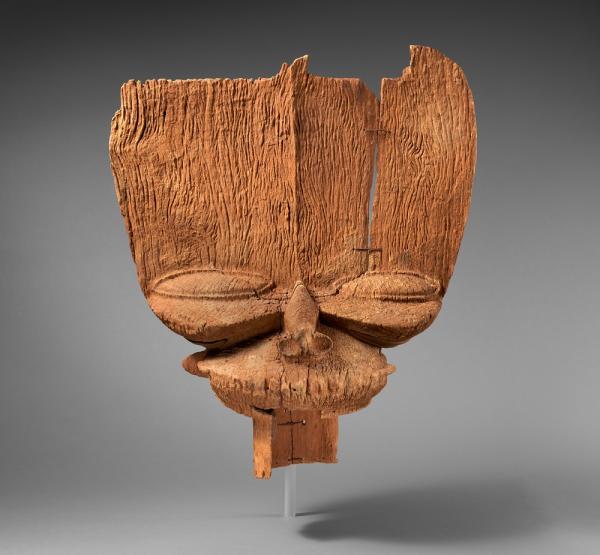
This exhibition will display a newly acquired 18th-century Cameroonian crown mask (Tsesah) and three related exhibits. At present, there are only 15 such artworks in the world, which is the first time to be exhibited in the United States. Tsesah is 94cm high and 82.6cm wide, created by the artist Bamileke. Tsesah is the embodiment of the royal family and authority in western Cameroon. Chieftains and envoys in the family will wear this mask when attending the royal funeral, enthronement ceremony and other activities.
Days of our lives: Adolf de Meyer Photography Exhibition
Exhibition period: December 4, 2017-March 18, 2018
Venue: Metropolitan Museum of Art

Adolph de Meyer(1868-1946) was an American photographer who was active in the early 20th century. He was famous for taking portraits of famous people in Europe and America. He worked in vogue, Vanity Fair, Harper’s Bazaar and other magazines. However, most of his works were destroyed during World War II, and only a few of them have been preserved to this day. About 40 photographs of Meyer will be exhibited in this exhibition, presenting dazzling portraits of some famous people of his time. All the exhibits are collected by the Metropolitan Museum of Art, which is the first time that the museum has held his retrospective exhibition.
France:
Italian Moment-Masterpiece of Upper France Region
Exhibition period: October 18th, 2017-May 28th, 2018.
Venue: Lance Branch of Louvre

Through the unique arrangement of Italian works in nord-pas-de-calais and Piccadilly, this exhibition will focus on more than 20 masterpieces from the 16th, 17th and 18th centuries, and set four themes. The first theme will show the tragic color of landscape painting, the second theme will introduce the different changes of female images surrounded by children, the third theme will show the works of Caravaggio followers, and the last theme will show a series of historical paintings with mostly mythical works. This exhibition will also draw an ideal ending for the 2017 "Italian Moment" tour in North France.
Japan:
Kumatani Shouyi: The Joy of Life
Exhibition period: December 1, 2017-March 21, 2018.
Venue: Tokyo National Museum of Modern Art

This exhibition brings together about 200 works of Shouyi Kumatani collected in various parts of Japan, presenting his bright, simple, humorous and memorable artistic world. Kumagai Morikazu (1880-1977) is a modern Japanese painter. He is regarded as the iconic figure of "Les Fauves" in Japanese art history. He was born in a rich family but lived a poor life, and in his later years he was close to abstract painting. This exhibition is a special exhibition to commemorate the 40th anniversary of his death.
Japan Craft Exhibition-Cherish Nature
Exhibition period: December 1, 2017-February 18, 2018
Venue: Tokyo National Museum of Modern Art

Cherishing nature is a major theme of Japanese craft, which has developed into an inherent performance art according to the time. This exhibition will present about 120 collections of handicrafts, introducing the beautiful crafts bred by the heart of Japan, which cherishes nature. Exhibits include ice-painted porcelain Tang pattern vases, Youchan’s visit to the kimono "Guiyuan", "There is no calendar in the mountains", and Lao Song’s painting of dates.
Lecture information:
Shanghai:
Climate change and the rise and fall of Angkor civilization
Time: Thursday, December 7, 2017 at 19:00.
Venue: Academic Lecture Hall of Shanghai Museum
Speaker: Charles higham (Professor, Department of Anthropology and Archaeology, University of Otago, New Zealand)

In the late Iron Age, the decrease of monsoon and rainy season brought a relatively dry climate to Southeast Asia. Correspondingly, there is more evidence that the agricultural revolution is emerging in these areas, including reservoir construction, irrigation, and rice cultivation and cultivation in specific areas. In the 8th century, with the establishment of Angkor Kingdom, the management of water resources and irrigation system became very important, and became the key factor for the survival of the regime. The deified rulers have always been closely linked with the construction of reservoirs, the diversion of rivers and the construction of water conservancy networks in paddy fields. The ever-complex water conservancy management system became the key to the country’s well-being at that time. However, another climate change in the 15th century brought unpredictable climate fluctuation. Persistent drought and rapid precipitation led to land subsidence and the destruction of water conservancy facilities. Angkor, as the center of political power, soon died out.
Water, Ubiquitous Water Resources —— A Case Study of Petra Ancient City
Time: Friday, December 8, 2017 at 19:00.
Venue: Academic Lecture Hall of Shanghai Museum
Speaker: Susan E. Alcock (Professor, University of Michigan, USA)

The lecture will explore some understandings about Petra, an ancient city in the south of Jordan that was once the capital of Nabatai Kingdom at the turn of the AD, and some misunderstandings about this great city in the past. Although it is located in a semi-arid climate zone, Petra has been the core city in the long-distance trade chain in this region for a long time, and a large number of tombs, temples and palaces have been built here. In the Roman and Byzantine era, Petra also maintained prosperity. The speaker of this lecture participated in the investigation conducted by Brown University’s Petra Archaeological Research Project in the area north of the center of Petra, hoping to trace the historical changes of this inland city.
The Story of Two Icons —— Different Approaches to the Complexity of Prehistoric Society
Time: 19:00 on Saturday, December 9, 2017.
Venue: Academic Lecture Hall of Shanghai Museum
Speaker: Colin Renfrew (Professor of Archaeology, Cambridge University, UK)

The lecture will analyze and interpret the early sculptures of Clardy culture in the Mediterranean region and the jade cong of Liangzhu culture in China, and discuss the complicated process of prehistoric society in the world. Professor Lun Furu, the speaker of this lecture, presided over a large number of archaeological excavations in cyclades. He has made remarkable achievements in the research fields of prehistoric culture, linguistic diversity and the origin of human cognition, archaeological genetics and archaeological theory in the Aegean Sea.
Reading and the Art of Book Tickets
Time: 14:00 on December 2, 2017 (Saturday)
Venue: Art Salon, 0 m Floor, China Art Palace
Speaker: Jin Dapeng (Secretary General of Shanghai Alumni Association of China Academy of Fine Arts)

Book tickets originated in Europe in the 15th century. It is 300 years earlier than stamps. At that time, books were so expensive that the books in the library were even chained up. There is a book ticket on the title page of the book to show who the book belongs to. What exactly is a book ticket? How is the book ticket made? What kind of painting is "gem on paper"? What are the international regulations on book tickets? Is there a professional library ticket agency in the world? What is the artistic value of book tickets? Can we make a book ticket like celebrities? ….. This lecture will talk about and discuss the above questions.
Approaching the "doctor" of art
Time: 14:00 on December 2, 2017 (Saturday)
Venue: Multifunctional Hall, 0 m Floor, China Art Palace
Speaker: Situ Yong (Professor, Shanghai school of visual arts Institute of Cultural Relics Protection and Restoration) and Wang Chen (Deputy Director, painting conservation Center, Shanghai Academy of Fine Arts)
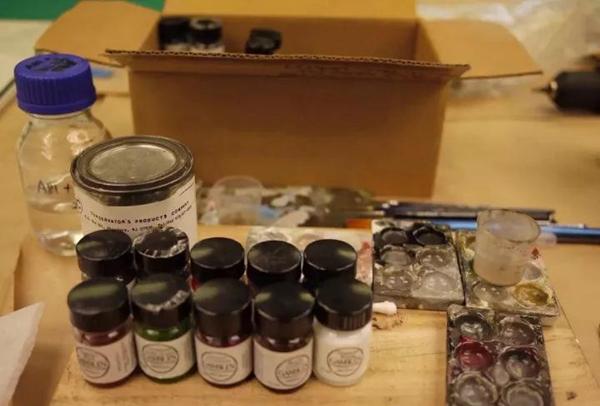
An oil painting will slowly decline and age with time. This is determined by the material and structure of oil painting itself and influenced by various environmental factors. Therefore, the protection and restoration of oil painting is particularly important. This lecture consists of two sessions, namely "Contemporary painting conservation and Practice" and "Protection and Maintenance of easel painting". In the first lecture, the speaker, Situ Yong, will talk about painting conservation and spiritual practice from the aspects of "oil painting and common damage in oil painting", "scientific principles and norms in restoration" and "general technical process and restoration cases". In the second lecture, Wang Chen, the speaker, will lead you to understand the possible problems in the maintenance of easel painting and the factors that lead to deterioration, and tell you how to carry out daily maintenance and avoid improper operation.
The structure of dialogue with architects
Time: December 5, 2017 (Tuesday) from 19: 00 to 21: 00.
Venue: Small Theater, 3rd Floor, Shanghai Museum of Contemporary Art
Speaker: Yastaka Konishi

This lecture will share with the audience the past structural design projects of the speaker Xiaoxi Taixiao. He is well known by the world for his desk as thin as a piece of paper and the workshop of KAIT (Kanagawa University of Technology) in cooperation with architect Junya Ishigaki. The incredible thinness and thinness of KAIT workshop can not be separated from his structural engineering. The residential work "porcelain doll Creative Workshop", which is co-operated by Koichi Taixiao and Maeda Keisuke, shows an amazing sense of suspension. The structural design projects introduced in this lecture include the Folk Art Museum of China Academy of Fine Arts in cooperation with Kengo Kuma, and the residential project "String and Arc" in cooperation with Zhongying Zhongshan. By explaining these cooperative processes, Xiaoxi Taixiao will convey his long-standing view, that is, "active communication and creative cooperation between architects and architects are important links in completing construction projects."
"Realism" and "Poetic" of China’s Landscape Paintings
Time: December 3, 2017 (Sunday) from 14: 00 to 16: 00.
Venue: Qianhe Art Space
Speaker: Zheng Wen (Vice President, Academy of Fine Arts, East China Normal University)

Is China’s landscape painting realistic? How do we understand the "drawing truth" put forward by Jing Hao in the Five Dynasties? What does it have to do with sketching in landscape painting? How is the poetic feature presented in landscape painting? This lecture will expound the core values of China’s landscape painting from two aspects: the "realistic" and the "poetic", so as to help people really understand China’s landscape painting.
Beijing:
Identity: Regional Practice of Introspection
Time: December 1, 2017 (Friday) from 18: 30 to 20: 30.
Venue: Lecture Hall, 4th floor, Tsinghua University Art Museum.
Speaker: Li Xiaodong (Professor, School of Architecture, Tsinghua University)

From the big cultural background, China has a very long and glorious history; From the perspective of space, the city of China now feels very modern. When you look closely at China, you will find that the urbanization of China is developing too fast, and many problems are too late to be considered, which has caused many very difficult things. This lecture will focus on the topic of "identity", starting with the problem of defining China, and combining with the reasons behind each small building made by the speaker himself and the methods adopted for in-depth discussion.
Brick writing in ancient China
Time: 9:30-11:30 on Sunday, December 3, 2017.
Venue: Floor 2, Linqiong Building, Ancient Books Museum, National Library
Speaker: Tianshu Zhu (distinguished professor, doctoral supervisor, Central Academy of Fine Arts)
The history of China’s calligraphy tells us that the evolution of calligraphy always stems from the people’s need for simplicity and the pursuit of beautification in the practice of using characters. Therefore, folk calligraphy can show us the various sections of this evolution process most directly. As an important part of folk calligraphy, brick writing has a position that other aspects can’t match, that is, the prosperous period of brick writing-from the Han Dynasty to the Six Dynasties, is precisely the most intense period of the evolution of calligraphy and brushwork. Moreover, the large number of brick texts is unmatched by other folk books. If the study of bamboo slips in the previous period has aroused a lot of enthusiasm, then today, the indifference to brick writing can not but cause us to think deeply.