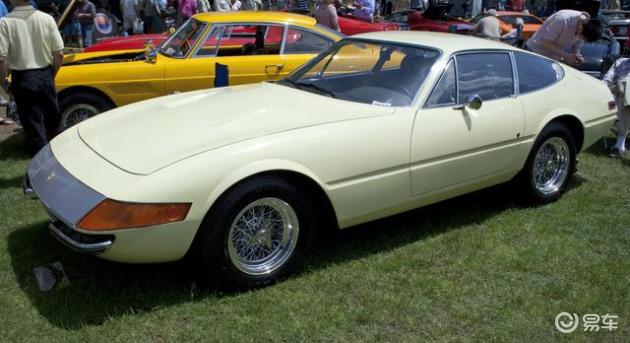
This is a two-door luxury sports model produced from 1968 to 1973. A total of 1,284 GTB/4 models () and 122 GTB /4 models () were produced.
It is equipped with a 4.4-liter V12 engine, which can output 352 horsepower at 7,500 rpm, with a peak torque of 431 Newton meters and a top speed of 280 km/h. The acceleration of 0-60 mph takes only 5.4 seconds.
The car body was designed by designer Leonardo Fioravanti and adopted the traditional layout. The suspension system is four wheels. The gearbox adopts 5-speed manual gear, which is installed in to achieve the best weight distribution.
This car was later informally called "Daytona", and the name came from Ferrari’s brilliant record of winning the top three in Dayton in 1967. Until today, Ferrari itself rarely officially uses this name.
According to the club historian’s data, the total output of this car is about 1,406, of which 156 are right-hand drive cars, 122 are factory-made convertible models, and 15 are version.
This is a successful and legendary classic car. In 2004, it was selected as the best sport in the 1970s by International Automobile magazine, and it ranked second among the top ten Ferraris selected by Auto Pioneer. This shows its position in Ferrari and the world.

It is a super-run produced from 1966 to 1973 and is considered to be the first super-run. It is designed by, with a 3.9-liter V12 horizontally and centrally, with an output of 350 HP and a top speed of 171 mph(276 km/h).
A total of 793 vehicles were produced, which were divided into three versions: P400, P400S and P400SV. Among them, P400 produced 275 vehicles from 1966 to 1969; P400S produced 338 vehicles from 1968 to 1971; P400SV produced a limited number of 150 vehicles from 1971 to 1973.
Miura sold for $20,000 when it was released, equivalent to $180,000 today, and was regarded as the first real super in history. It has appeared in movies and music works many times. For example, Miura appeared in the opening scene of the film Work in 1969.
Miura’s design and technology have had a profound impact on the subsequent Lamborghini Super. It marks the era of super-entry, and establishes the mainstream position of this layout in high performance.

It is a streamlined supercar, which started production in 1974 and ended in 1990. It was designed by Marcello Gandini, a designer from a well-known Italian design studio, and its recognizable wedge shape and scissor doors became its iconic features.
Very popular, producing nearly 2000 vehicles in total. In the first five years, only about 150 vehicles were produced each year, but in the late 1980s, with the new business owner taking over Lamborghini, Countach’s output increased greatly, accounting for more than half of the total output in the last five years.
Countach is also leading the way in technology. It is the first mass-produced V12 engine with vertical layout. The space frame chassis represented a great innovation at that time, and it was welded by round pipes, which greatly improved the rigidity.
As the flagship super, Countach is equipped with a variety of V12 engines with different displacement, which has been upgraded from 3.9L and 276 horsepower in the initial stage to 4.8L and 5.0L, and the final displacement has reached 5.2L and 455 horsepower. It marks the peak of Lamborghini brand.
The 25th anniversary edition is the most perfect variant of Countach, adopting many new technologies and materials. It can accelerate from 0 to 60 mph in 4.7 seconds, with a top speed of 183 mph. A total of nearly 700 25th anniversary editions were produced, more than any other variant.
Overall, Countach’s brilliant sales, revolutionary technological innovation, iconic design, and its influence on successors and the whole world prove that it is a real best-selling super. It laid the foundation for Lamborghini’s success and became one of the most important models in history.
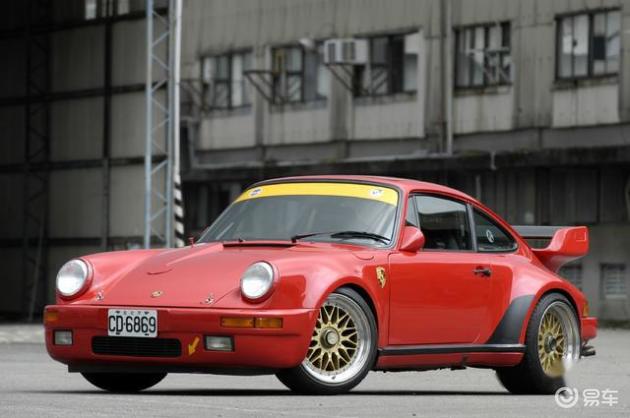
BTR is an extremely high-performance product produced by automobile manufacturer Ruf Automobile in 1983. It was built on the platform (produced in 1978-1989), using a 3.4-liter horizontally opposed six-cylinder engine, with a maximum power of 375 HP and a peak torque of 480 Nm.
The car’s competitive dynamic performance data include: 0-60 mph acceleration takes only 4.3 seconds, 100 km acceleration takes only 9.6 seconds, and quarter mile acceleration takes only 12.5 seconds to reach a high speed of 180 km/h. Its top speed can reach 305 km/h. In the "World’s Fastest Vehicle" competition held by Road & Track magazine, a Ruf BTR won the championship with an advantage of 16 km/h, and performed well in the accelerated test. Three years later, the same car entered the race again, and the speed still reached 301 km/h, beating most of them at that time.
Ruf BTR was recognized as one of the strongest students in 1980s with its excellent dynamic performance and handling performance. It established Ruf Automobile as a high-performance automobile manufacturer. Today, more than 30 years later, Ruf BTR is still a fascinating legend in the super-running world.
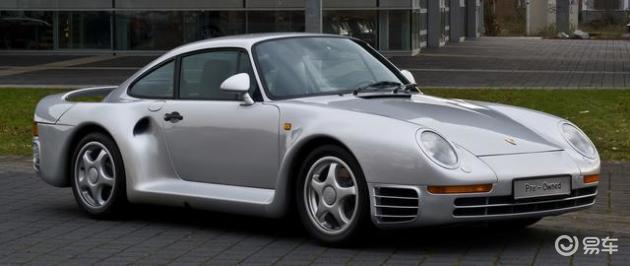
It was produced between 1986 and 1993, and only 337 vehicles were produced in total. It is equipped with a 2.8-liter twin-turbo horizontally opposed six-cylinder engine with a maximum horsepower of 444 HP and a torque of 500 Nm. Porsche 959 adopts all-wheel drive, with a top speed of 317 km/h and an acceleration of 0-100 km/h in 3.7 seconds.
As the fastest mass production in the world at that time, Porsche 959 represented the pinnacle of automobile manufacturing technology. It adopts lightweight body and chassis structure, shape, and full-time four-wheel drive system and many other high-tech. These technologies were later applied to mass production.
Porsche 959 participated in 1986 and achieved the first place in its category and the seventh place in the overall ranking. It also took part in Paris-and won the top three.
A total of 337 Porsche 959 vehicles were produced, of which 292 were normal production vehicles and 37 were prototypes and pre-production vehicles. In addition, eight additional "comfort versions" were produced. These eight cars cost as much as 748,000 German marks, which were the most expensive Porsche at that time and the rarest and most expensive version in China.
Generally speaking, the explosion degree of Porsche 959 can be reflected by its excellent performance, technology leading its contemporaries for 10 years, extremely low output and extremely high collection value. It truly became a model and milestone in the 1980s.
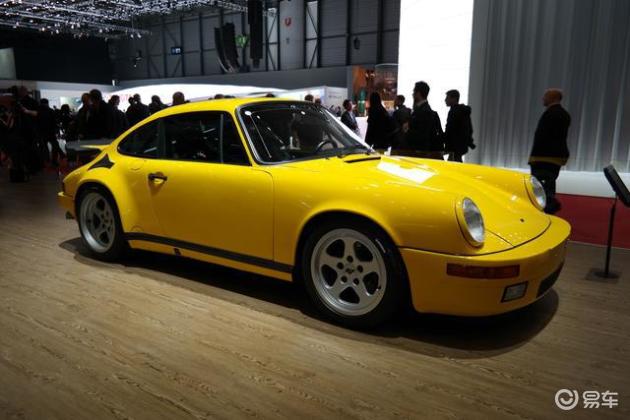
Rufctr "Yellow Bird" is a limited-edition high-performance product introduced by German automobile manufacturer Ruf Automobile in 1987. Based on the platform, it uses a 3.4-liter twin-turbocharged horizontally opposed six-cylinder engine with a maximum power of 469 HP and a peak torque of 553 Newton meters.
The outstanding dynamic performance data of this car include: 0-60 mph takes only 3.65 seconds, 100 km acceleration takes only 6.71 seconds, and the top speed is as high as 342 km/h. It was the fastest production car in the world at that time. It also holds the unofficial lap record of the Northern Ring Road in New Bogeling for many years.
Ruf CTR, with its superior dynamic performance, handling performance and unique appearance, was a legend in the late 1980s and was nicknamed "Yellow Bird". It beat Ferrari, Lamborghini and other famous cars in the same period, and was recognized as the fastest production car in the world at that time. Today, more than 30 years later, Ruf CTR is still desirable. In 2017, Ruf launched a new model to pay tribute to the original CTR.
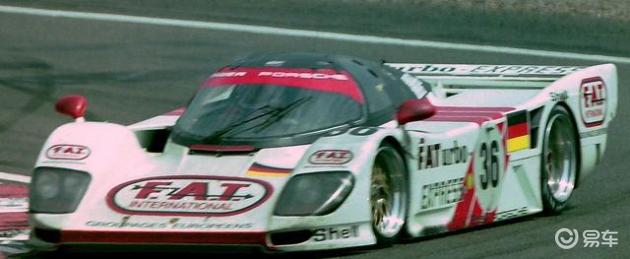
This is a road version based on Porsche 962 racing car, which was manufactured by German company Dauer Racing. A total of 13 cars were produced.
Compared with the 962 racing car, Dauer 962 Le Mans has added a second seat and leather interior, and the engine displacement has also increased slightly, with a maximum power of 730 HP.
In 1998, this car measured a top speed of 404.6 km/h and was rated as "the fastest highway in the world" by some magazines.
In 1994, Dauer 962 Le Mans participated in the 24 Hours of Le Mans and won the championship, which was the last victory of Porsche 962.
Dauer 962 Le Mans is very rare and has strong empathy. It represents the highest technical level made in the 1990s and can be said to be a real "explosive" limited edition.
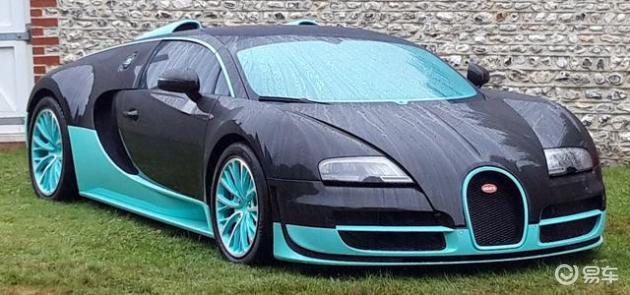
It is a super car, which was produced by the subordinate Bugatti Automobile Company in 2005. It is equipped with 8.0-liter four turbines, with a maximum power of 987 HP and a top speed of 407 km/h.
Its uniqueness lies in its powerful power and excellent handling performance. It not only has outstanding acceleration and extreme speed performance, but also has excellent handling stability. This car has set the world speed record for many times, and once became the fastest production car in the world.
After ten years of production, Veyron stopped production in 2015 and sold a total of 450 vehicles. It has opened a new chapter in supercar and become an eternal legend in the minds of car enthusiasts. Veyron’s success laid the foundation for Bugatti’s next-generation supercar.

It is a mid-engine produced by SSC North America from 2004 to 2013. It has set a record for the fastest car production in the world for many times, and is known as the "fastest production car", which has a very high collection value.
Main technical parameters and milestones include:
-In 2007, SSC Ultimate Aero TT was certified at a speed of 410 km/h, becoming the fastest production car in the world at that time.
-It uses a 6.3-liter V8 engine with a maximum power of 880 kW and a peak torque of 1500 Nm. The top speed is 410 kilometers per hour.
-The upgraded version of the 2009 model uses a twin-turbo engine with a power of 960 kW and a top speed of 415 km/h..
-In 2013, the limited edition XT adopted a 6.9-liter twin-turbo V8 engine with a maximum power of 970 kW and a theoretical speed of 432 km/h..
-It has been produced for ten years, with a total production of about 100 vehicles, which is the ultimate limited edition supercar. In 2012, an Ultimate Aero TT sold for as much as $431,000 at auction.
-SSC Ultimate Aero represents the peak of super-running technology in the first decade of the 21st century, and it is a truly "explosive" car, which is deeply loved by collectors.

Koenigsegg is a mid-engine supercar produced by Swedish Koenigsegg Automobile Company from 2010 to 2018. As the successor model of CCX, it represents the most advanced automobile technology at that time, and was rated as "the ultimate of the year", which has a high collection value.
The main technical specifications and sales volume are as follows:
-It uses a 5.0-liter twin-turbo V8 engine with a maximum power of 960 HP and 1000 Nm. The top speed exceeds 400 km/h.
-Agera R version was released in 2011, and the power was increased to 1140 horsepower, and the acceleration from 0 to 100 kilometers was only 2.8 seconds.
-Agera S launched in 2013 is suitable for no country, with a power of 1,030 HP.
The-One:1 version was introduced, with a power of up to 1,360 HP and a vehicle weight matching power ratio of 1:1, making it the "world’s first megawatt supercar".
-Agera RS is a high-performance track version of the Agera series, and its top speed of 447 kilometers per hour set in 2017 has been maintained to this day.
-The Agera series produced about 270 vehicles between 2010 and 2018, which is subversive with extremely low mass production. It created and represented the technical peak of super-running in the 1910 s.